
The sidrería: Basque cider houses, giant steaks and the art of the txotx
From January to spring, locals head to the hills for cod omelet, monumental steaks and cider straight from the barrel. Here's how a Basque cider house works — and how not to embarrass yourself at the txotx.
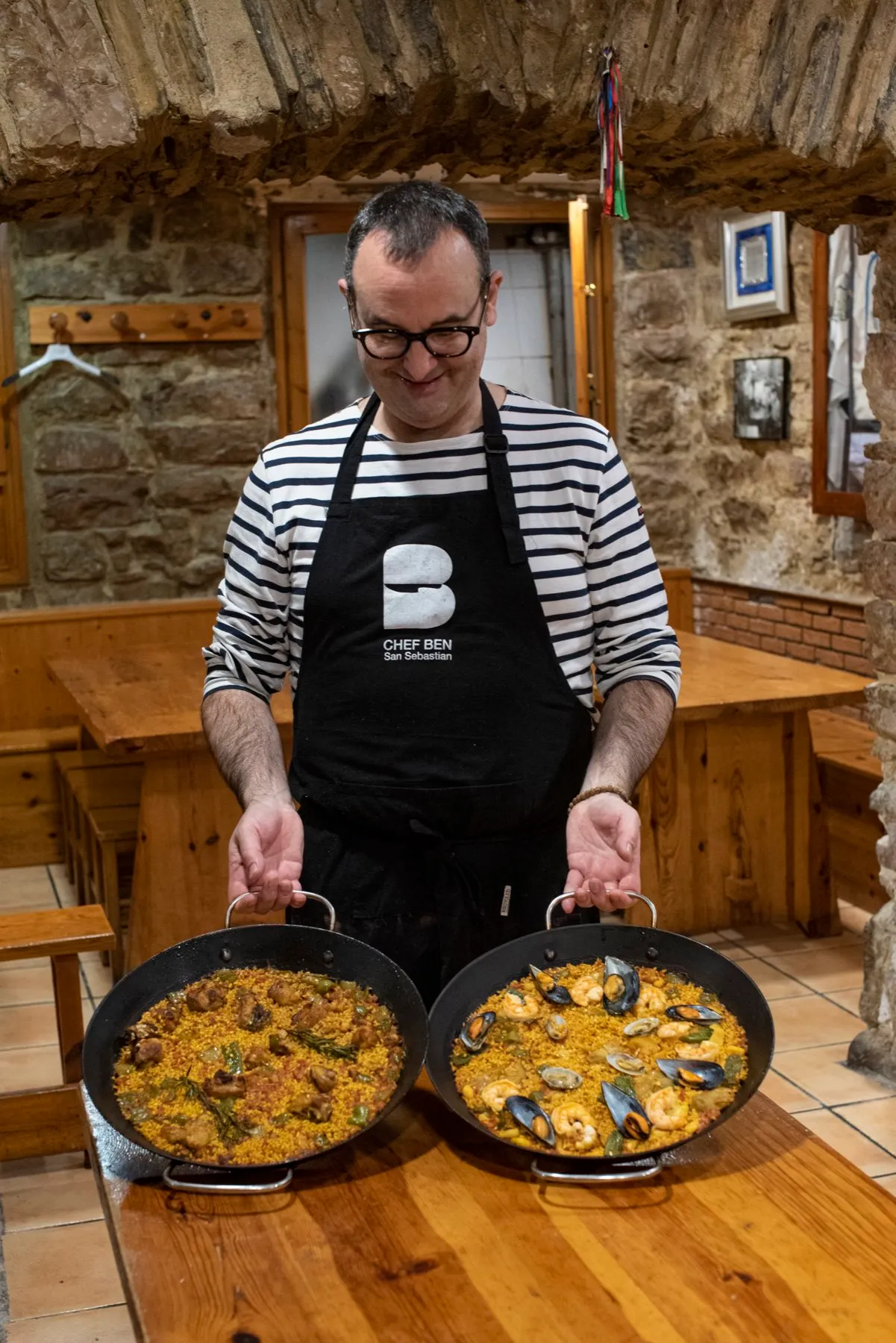
If you visit us between January and spring and someone invites you to a sagardotegi — a cider house — cancel whatever you had planned. You’re about to experience the most gloriously chaotic meal in Basque culture.
What a sidrería actually is
In the hills just outside San Sebastián (the town of Astigarraga is the capital, twenty minutes away), farmhouses have been pressing apples into dry, funky, completely un-sweet cider for centuries. During the season, they open their doors and serve one legendary fixed menu while the new cider matures in enormous wooden barrels called kupelas.
Forget everything you know about American hard cider — this is drier, wilder, cloudy, still (no bubbles until the pour), and it’s less a drink than a ritual.
The txotx ritual
At some point, someone shouts “Txotx!” (“choch!”) and the room stands up. The cider master opens a pencil-thin stream from a barrel taller than you, and everyone lines up to catch a few fingers of cider in their glass, mid-air, one after another. The stream hits the glass, wakes the cider up, and you drink it right there.
Rules to not look lost: take only a little each time (you’ll be back), tilt the glass so the stream breaks against the side, drink it fresh, and never, ever fill up like it’s a soda fountain. Think of it as communion, if communion happened forty times per dinner and involved a two-hundred-year-old barrel.
The menu never changes (thank goodness)
Every sidrería serves the same feast, and it’s perfect: chorizo cooked in cider, then salt cod omelet, then fried cod with peppers, and then the main event — the txuleta, a massive, days-aged beef chop seared hard outside, nearly raw inside, cut off the bone and shared by the table. Dessert is Idiazabal cheese with walnuts and quince paste. You eat standing or at long communal tables, elbow to elbow with strangers who won’t stay strangers.
For my American guests I describe it as a barn-raising crossed with the world’s best steakhouse: rustic, loud, communal — and the beef will genuinely rearrange your standards.
The season (and the loophole)
Classic txotx season runs roughly mid-January to the end of April — the Basque answer to the question “what’s there to do here in winter?” (Answer: eat like a king in a barn.) Many houses now open longer with bottled cider, but the barrel season is the real thing.
Make it part of a bigger food journey
A cider house evening is the crown jewel of my Multi-Day Cooking Experience — over several days we mix hands-on cooking classes with the experiences that explain this region: the market, the txotx, the whole ecosystem that makes Basque food what it is. If you’re building your trip around eating (correct decision), tell me your dates and I’ll build the itinerary around what’s in season.
Txotx! — you’ll be shouting it correctly by the second barrel.