
Pintxos vs tapas: how to eat like a local in San Sebastián
They look similar on the bar, but pintxos and tapas come from different worlds. A Donostia-born chef explains the difference — and how to order without looking lost.
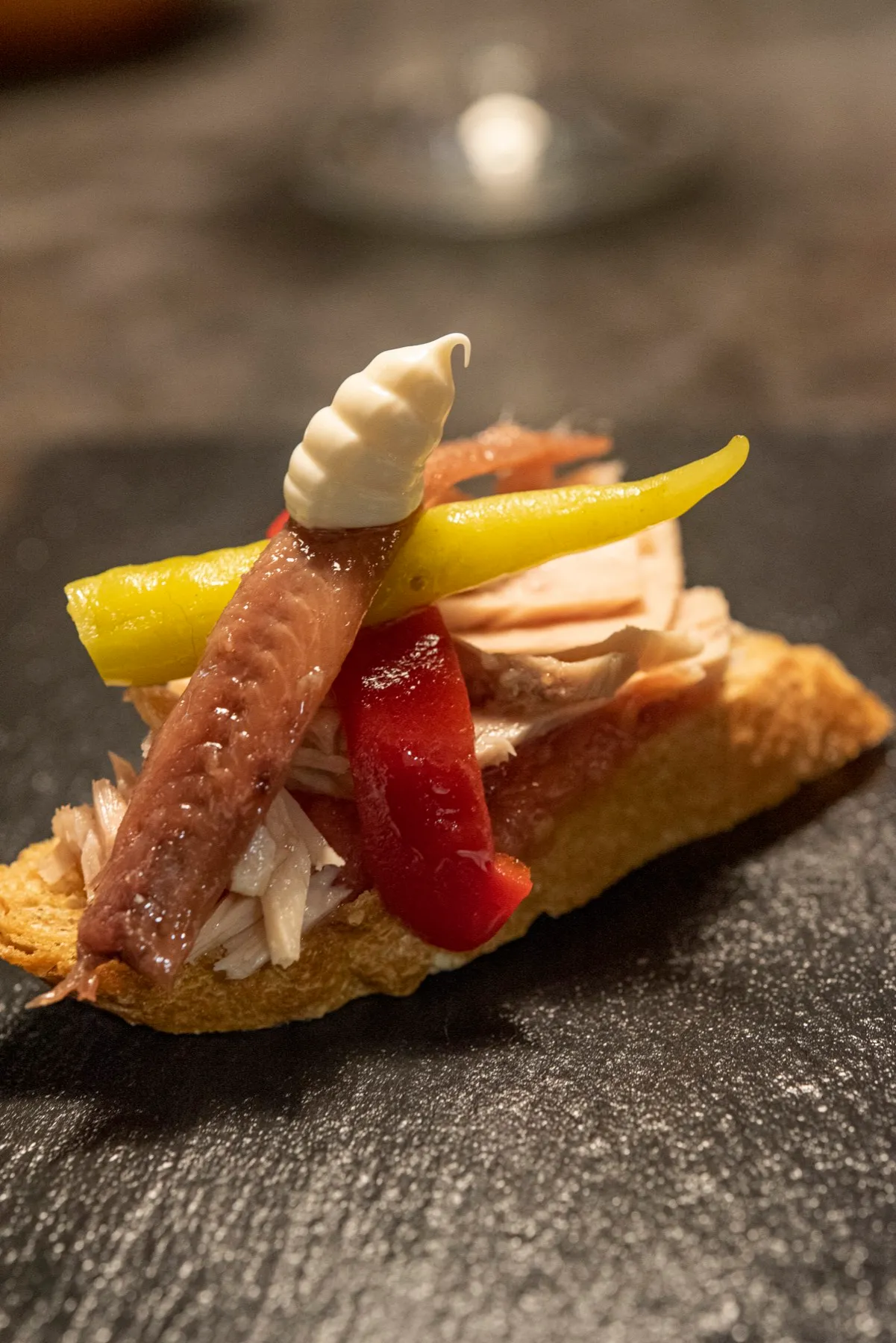
Every week someone in my kitchen asks me the same question, usually while holding a slice of tortilla: “So… these are Basque tapas, right?”
I always smile, because it’s a fair guess. And it’s also the fastest way to get gently corrected by anyone born here. Pintxos are not tapas. Let me explain why — it will change how you eat for the rest of your trip.
Tapas are a ritual. Pintxos are a craft.
Tapas belong to the south and center of Spain: small plates, often free with your drink, made to be shared around a table over a long conversation. Beautiful tradition. Not ours.
Pintxos (you’ll also see pinchos — the word comes from pinchar, to pierce, because the originals were skewered to a slice of bread with a toothpick) are the Basque version of finger food, and here in Donostia we treat them the way the French treat pastry. A great pintxo is a tiny composed dish: one or two bites, built with intention, often by a cook who takes it very seriously.
Think of it this way: if a tapa is a side dish that came along with your drink, a pintxo is a miniature main course that happens to fit on a slice of bread.
How a pintxos night actually works
Here’s the part nobody tells you before you arrive. You don’t sit down, and you don’t stay in one bar. A proper pintxos crawl (poteo) works like this:
- One bar, one specialty. Locals go to each bar for the thing it does best — the mushroom at one, the txuleta bite at another, the tortilla somewhere else. Ordering five things in one bar is the tourist move.
- Order at the bar, out loud. The counter display is only half the story; the best pintxos are usually cooked to order from the chalkboard.
- A drink per stop. A short beer (zurito) or a glass of txakoli, our young white wine, poured from high to wake it up.
- Then you move. Two bites, one drink, next bar. The energy is the whole point.
If you grew up with American bar culture, the closest thing I can compare it to is a great bar crawl where every stop happens to have food worth traveling for — imagine if bar-hopping and a tasting menu had a child.
When to go
Locals fill the old town bars between 1:00 and 3:00 for lunch, and from about 7:30 in the evening. In summer, the streets of the Parte Vieja are buzzing until late; in autumn and winter the crowd is more local, the mushrooms and game show up on the chalkboards, and honestly — that might be my favorite season to eat here.
The best way to understand pintxos? Make them.
You can eat pintxos for a week and love every bite. But the moment it really clicks is when you build one yourself — when you understand why the Gilda has exactly three ingredients, or what a proper tortilla should feel like inside.
That’s exactly what we do in my Pintxo Cooking class: four and a half hours, a morning walk through the market, and a table full of pintxos you made with your own hands, with Spanish wines to wash them down. Come hungry.