
Five things Spaniards wish you knew about paella
Yes, we'll teach you paella in San Sebastián — but first, let a Spanish chef clear up the myths: what real paella is, what it isn't, and why lunch is the only correct time.
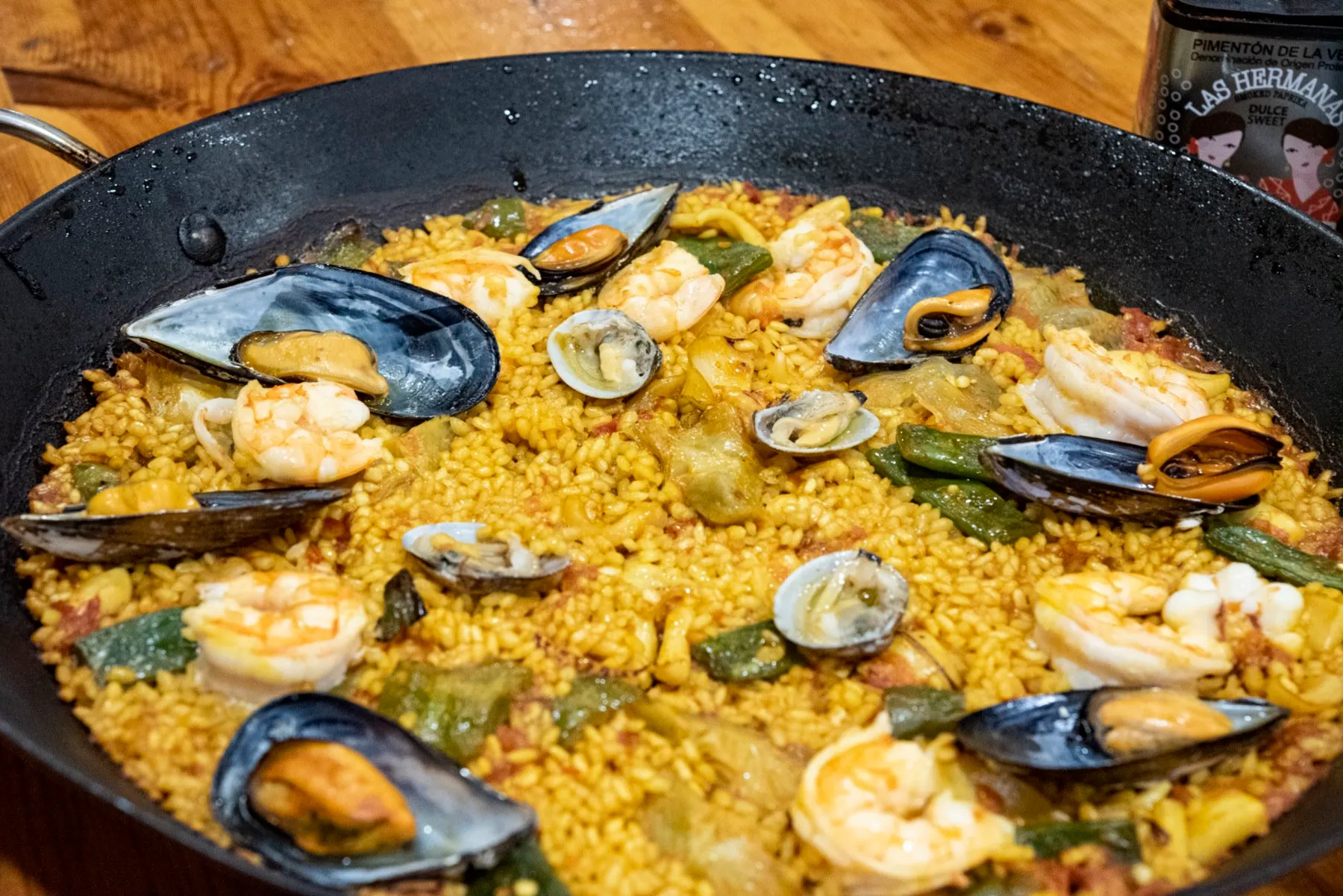
Let me start with a confession that might surprise you: paella is not Basque. It’s not even northern. Paella is from Valencia, on Spain’s east coast, and any Valencian will remind you of this with the energy of a Texan explaining barbecue.
So why does a Basque chef teach a paella class? Because it’s the most iconic dish of my country, because most of what travelers have been told about it is wrong, and because cooking it properly is one of the great pleasures of Spanish cuisine. Let’s fix the myths.
1. Paella is a lunch dish. Full stop.
In Spain, paella is eaten at 2 or 3 in the afternoon, ideally outdoors, ideally on a Sunday, always with family or friends and nowhere to be afterwards. A restaurant pushing “paella dinner” at 8pm is telling you, quietly, who it’s for. (It’s not for Spaniards.)
2. The rice is the star — everything else is a supporting actor
Americans often judge a paella by how much stuff is piled on top. We judge it by the rice: every grain separate, loaded with flavor from the stock and the sofrito, in a layer thin enough that the pan does its work. If the rice is bland and the shrimp are pretty, the paella failed.
3. Socarrat is the prize
That crackling, caramelized layer of rice stuck to the bottom of the pan? It’s called socarrat, and it’s not a mistake — it’s the trophy. Spaniards will fight over it with spoons. If your paella has never been slightly “burnt” at the bottom, you’ve been eating cautious paella.
4. Chorizo… we need to talk
No chorizo in paella. I say this with love. Even a famous British chef caused a national incident with this one. Traditional Valencian paella has rabbit, chicken and beans; the seafood version has what the coast provides. The moment chorizo enters, Spaniards call it “rice with things” (arroz con cosas) — which we’ll happily eat, but won’t call paella.
5. The pan matters more than you think
“Paella” is actually the name of the pan — wide, shallow, made to maximize that contact between rice and heat. Cook the same recipe in a deep pot and you’ll get a decent rice stew, but not a paella. It’s like deep-dish versus New York pizza: same ingredients, completely different physics, very strong opinions.
Learn it with your own hands
In my Paella Cooking class we do it right: the sofrito, the stock, the ratio, the nerve to leave it alone until the socarrat forms. Along the way we also make a proper Spanish omelet and gazpacho, and we finish with a cheese tasting and Spanish wines around the table.
Four and a half hours later, you’ll be the person at the dinner party back home saying “well, actually, real paella…” — and you’ll have earned it.