
Inside San Sebastián's private eating societies
Behind unmarked doors in the old town, members-only gastronomic societies have been cooking together since the 1800s. Here's what they are — San Sebastián's own version of what Bilbao calls a txoko — and how to taste that culture.
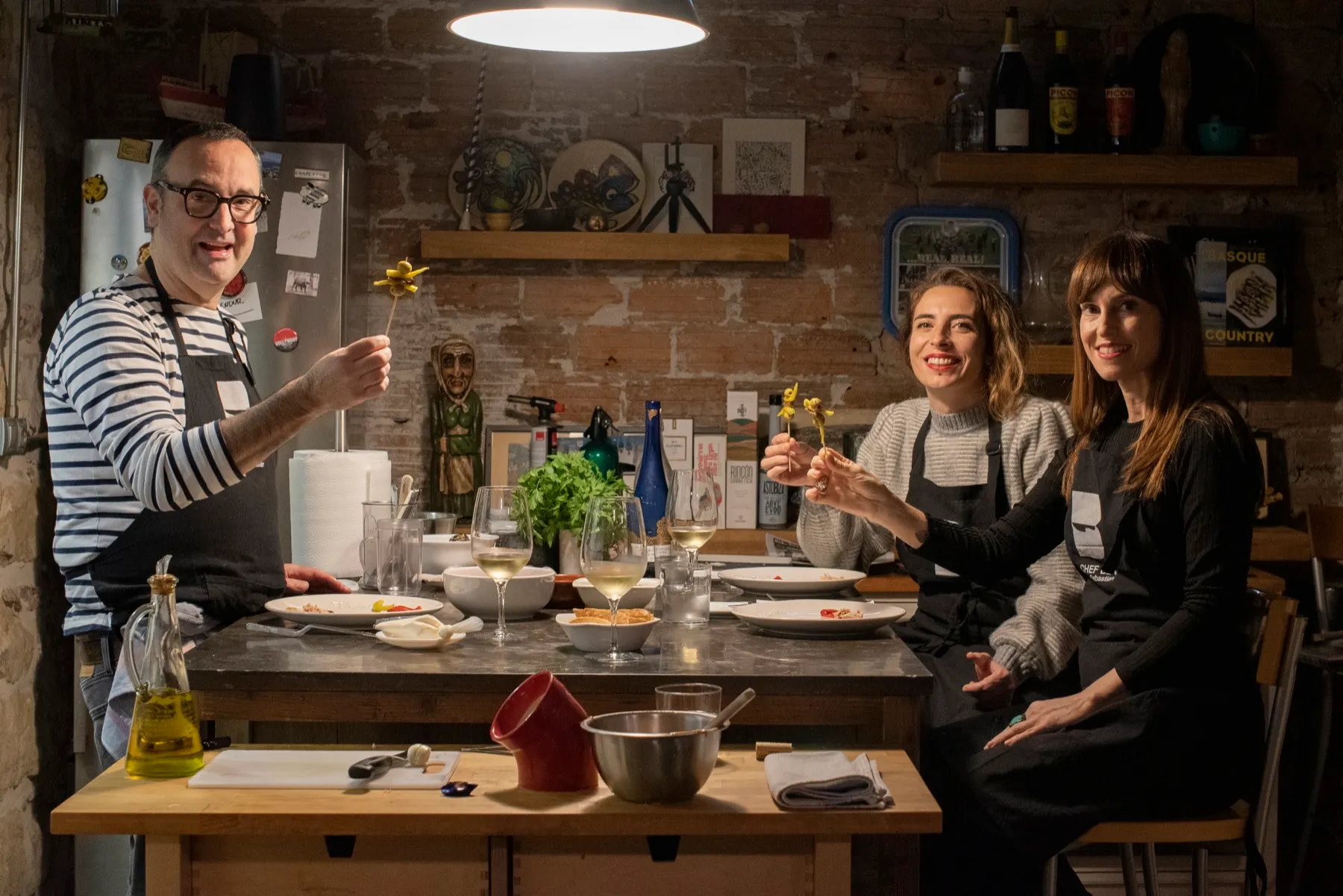
Walk through San Sebastián’s old town and you’ll pass them without knowing: plain doors, small plaques, no menu outside. Behind those doors are some of the best-fed rooms in Europe — and you can’t get in.
They’re called sociedades gastronómicas — San Sebastián’s own private eating societies — and they’re one of the things that make this city’s food culture genuinely unlike anywhere else. Head an hour west to Bilbao and you’ll hear people call theirs txokos (Basque for “cozy corner”). San Sebastián and Bilbao are sibling cities with a friendly rivalry that runs on more than just Real Sociedad versus Athletic Club on a Sunday — and this is one of the places it shows up: the societies were born here, in San Sebastián, and only later took root in Bilbao, where they picked up that name.
A club where the members do the cooking
A sociedad gastronómica is a private eating society. Members share a clubhouse with a serious kitchen and a dining hall, pay their share, and take turns cooking for each other. No chefs on staff, no customers — just members, their friends, and an honor-system cellar where you write down what you drank.
The oldest societies in San Sebastián go back to the 1800s, and some of the traditions are famously old-fashioned — a few of the historic ones were men-only spaces for generations (journalists love this part; The Daily Beast even wrote about sneaking into one). What matters for you as a food traveler is what happens inside: ordinary people — plumbers, teachers, lawyers — cooking extraordinarily well, arguing about the right way to make marmitako, and passing recipes down like family property.
If you’re American, here’s my best translation: imagine a members-only supper club crossed with a tailgate crew that’s been perfecting the same brisket for four generations — except the clubhouse is 150 years old and the “brisket” is hake in green sauce.
Why these societies matter to how this city eats
People ask me why San Sebastián, of all places, eats so well. The Michelin stars are the visible answer. These societies are the real one: this is a city where amateurs cook at a level that would embarrass professionals elsewhere, because cooking here is a social sport. When thousands of home cooks compete over who makes the best squid in its ink, the whole food chain — markets, producers, bars, restaurants — has to keep up.
Food sits at the centre of Basque life everywhere, not just here. Friends from school, family, colleagues, any excuse for a celebration — it’s all organised around a table, a proper meal and a long sobremesa afterwards. The societies are simply the most serious, most beautiful version of that instinct.
So how do you experience one?
Honestly? Unless you befriend a member, you probably won’t get through those doors — that’s the point of a private society, and I’d be lying if I told you otherwise.
But this is exactly why I created the Gastronomic Club Experience: a way to actually take you inside one. We start at the market, then cook and share a long Basque lunch inside a private society — the kind of room a visitor almost never gets to sit in. Small groups only, wine poured, no clock. It’s the closest you’ll come to a Donostia table without knowing a member yourself.
The doors of the old societies stay closed. Mine is open. Come see what the cozy corner is about.