
The real story of Basque cheesecake (from someone who lives ten minutes from La Viña)
The 'burnt' cheesecake conquering New York and Tokyo was born in a small bar in San Sebastián's old town. Here's the true story — and what makes it different from yours.
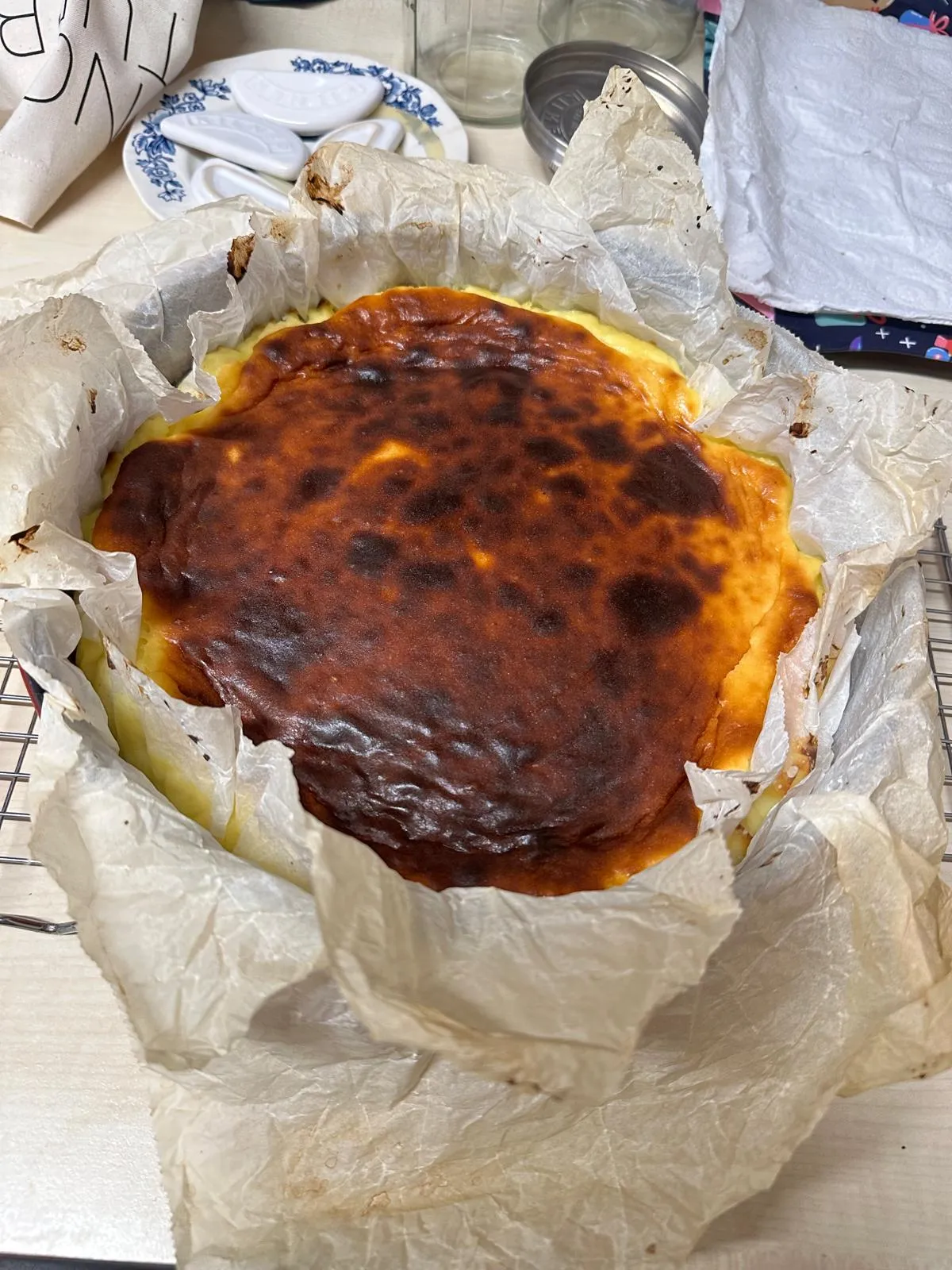
At some point in the last few years, “Basque cheesecake” showed up everywhere: New York bakeries, Tokyo department stores, your Instagram feed. Burnt on top, molten in the middle, no crust, no apologies.
What your feed probably didn’t tell you: it comes from a bar about ten minutes’ walk from my kitchen.
Born in the Parte Vieja
La Viña, a family bar on 31 de Agosto street in the old town, is where the modern version was perfected — the chef there spent years adjusting the recipe until it became the cheesecake: cooked hot so the top caramelizes deeply while the center stays barely set. It sits on the bar in tall paper collars, cut into generous slices, and people fly here — literally — to eat it at the source.
Here’s the part I love as a chef: nobody was trying to invent an international dessert. It’s bar food. It came out of the same old-town culture that produces great pintxos: one place, one specialty, perfected over decades until people cross the ocean for it.
Basque vs New York: settle the argument
Since half my guests are American, this comes up at my table constantly. The two cheesecakes are almost opposites:
- New York cheesecake is about control: water baths, low heat, a crumb crust, a perfectly smooth, dense, chilled slice.
- Basque cheesecake is about nerve: high heat, no crust, no water bath. You want the top to go deep brown — what looks like a mistake is the flavor. The center should tremble like a custard.
One is engineering. Ours is confidence. I’ll let you decide which philosophy makes for a better vacation.
The “burnt” part is a technique, not an accident
When guests bake it at home and send me photos, the most common miss is fear: they pull it out when it’s golden. Golden is halfway. That dark, almost bitter caramelized surface is what balances all that dairy richness — the same principle as the char on a good steak or the dark edges of a roasted marshmallow. Trust the brown.
See it happen — watch the reel on Instagram →
Taste it where it was born — then learn the family
By all means, make the pilgrimage to La Viña; it’s a San Sebastián rite. But the cheesecake is one delicious branch of a much bigger tree: the Basque way with dessert and dairy — sheep’s milk, curds, caramel — that goes back centuries before Instagram.
Here’s the thing about eating it at La Viña: you get the cheesecake. You don’t get the why. You don’t learn the oven temperature that makes the top go that deep brown, or why skipping the water bath is the whole point, or how to keep the center trembling instead of setting like a brick.
That’s the difference between visiting and learning. If what you actually want is to eat it and walk away able to make it yourself, back home, for people who weren’t lucky enough to be in San Sebastián — that’s what a class with me does that a bar counter can’t. I don’t publish the recipe here; I teach it hands-on, and it’s one of the dishes guests request most often.
Come hungry. Leave the water bath at home.
Frequently asked
What's the difference between Basque cheesecake and New York cheesecake?+
They're almost opposites. New York cheesecake is dense and chilled, baked slow in a water bath inside a graham-cracker crust. Basque cheesecake has no crust and no water bath — it's baked hot and fast, so the top caramelizes deep brown while the center stays soft and custardy, almost like it's trembling when you cut into it.
Why is Basque cheesecake burnt on top?+
It isn't actually burnt — that dark, almost bitter surface is caramelization from the high oven heat, the same principle as the crust on a good steak. It's the technique, not an accident: pull it out too early and you lose the flavor that balances all that cream cheese.
Where can I try the original Basque cheesecake in San Sebastián?+
The modern version was perfected at La Viña, a family bar in the old town (Parte Vieja). It gets busy — expect a queue in high season. If you'd rather see how it's actually made, and skip the line, that's something I cover hands-on in my classes. More about La Viña →
Can I learn to make Basque cheesecake with Chef Ben?+
Yes. I don't publish the full recipe — the exact oven temperature, timing and ratios are part of what you learn hands-on — but it's a dish guests ask for often, and I'm happy to include it in almost any class. It comes up most in Traditional Cooking, Kids & Parents, and the Gastronomic Club Experience.